Newsies JR
Turn-of-the-century New York
Large cast, flexible
Vocals
Dance
High-energy dancing and an ensemble that is on stage almost constantly. Great if your program is dance-heavy.
Standout roles
Jack Kelly · Katherine · Crutchie
Train all three
Singing, acting, and dancing are three crafts — great performers train each one on purpose. Pick a lab and work one tip per rehearsal.
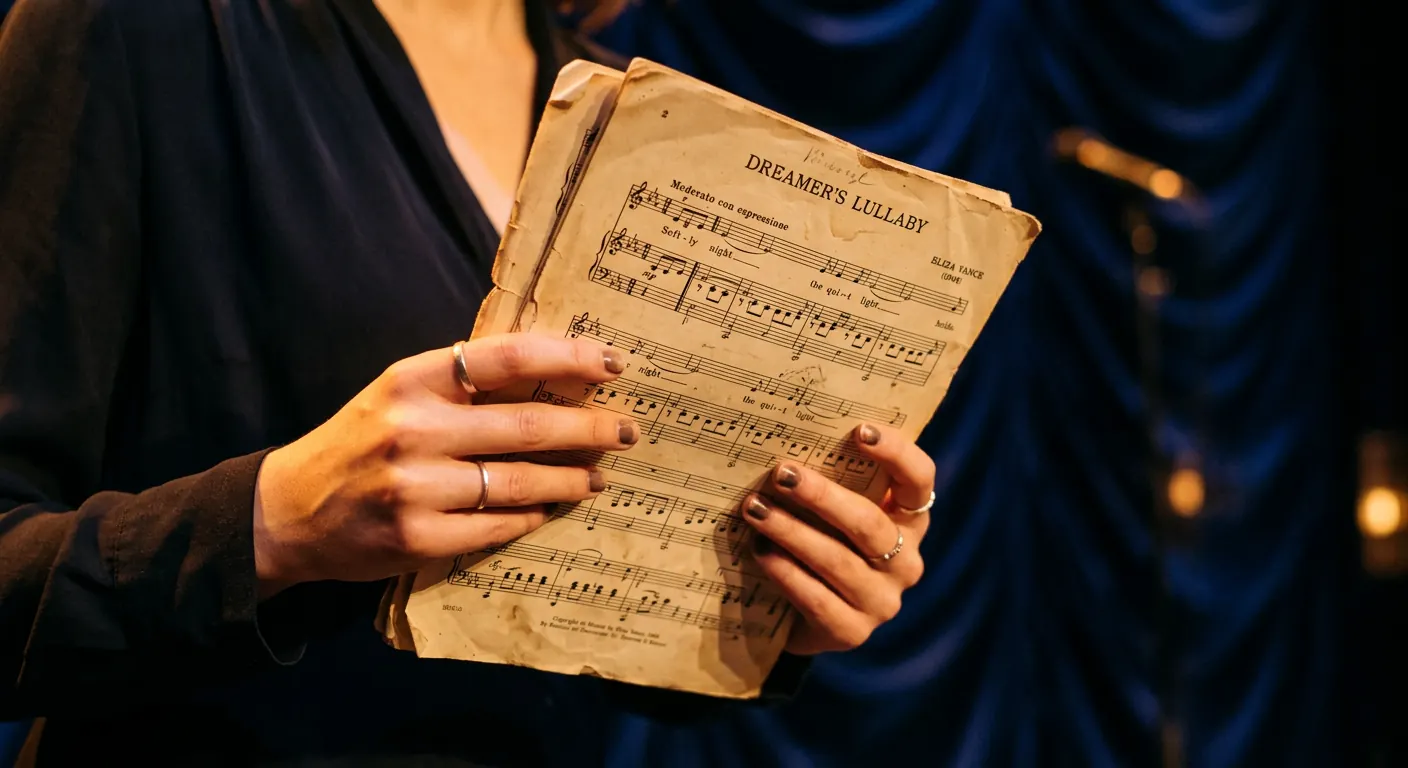
Sing stronger, safer, and with more heart
Your voice is your instrument — and like any instrument, it needs daily care. These fundamentals build technique that keeps your voice healthy through a full show run.
Lie on the floor, hand on your stomach, and breathe so your hand rises. That low breath is what powers every belted note. Shoulders stay relaxed — if they creep up, reset.
Five minutes of lip trills, sirens, and gentle scales before you sing anything full-out. Singing cold is how voices get hurt. Run the Guided Warm-Up on our Practice page.
A song you can sing confidently beats a song that impresses but strains. If you are hoarse after singing it once, it is not your song yet — find one in a comfortable key.
Ask: who am I singing this to, and what do I want from them? Every song is a monologue set to music. Decide your objective before you open your mouth.
Water all day, especially the week of auditions and tech week. Skip screaming at games and whispering when tired — both wear out your cords faster than singing does.
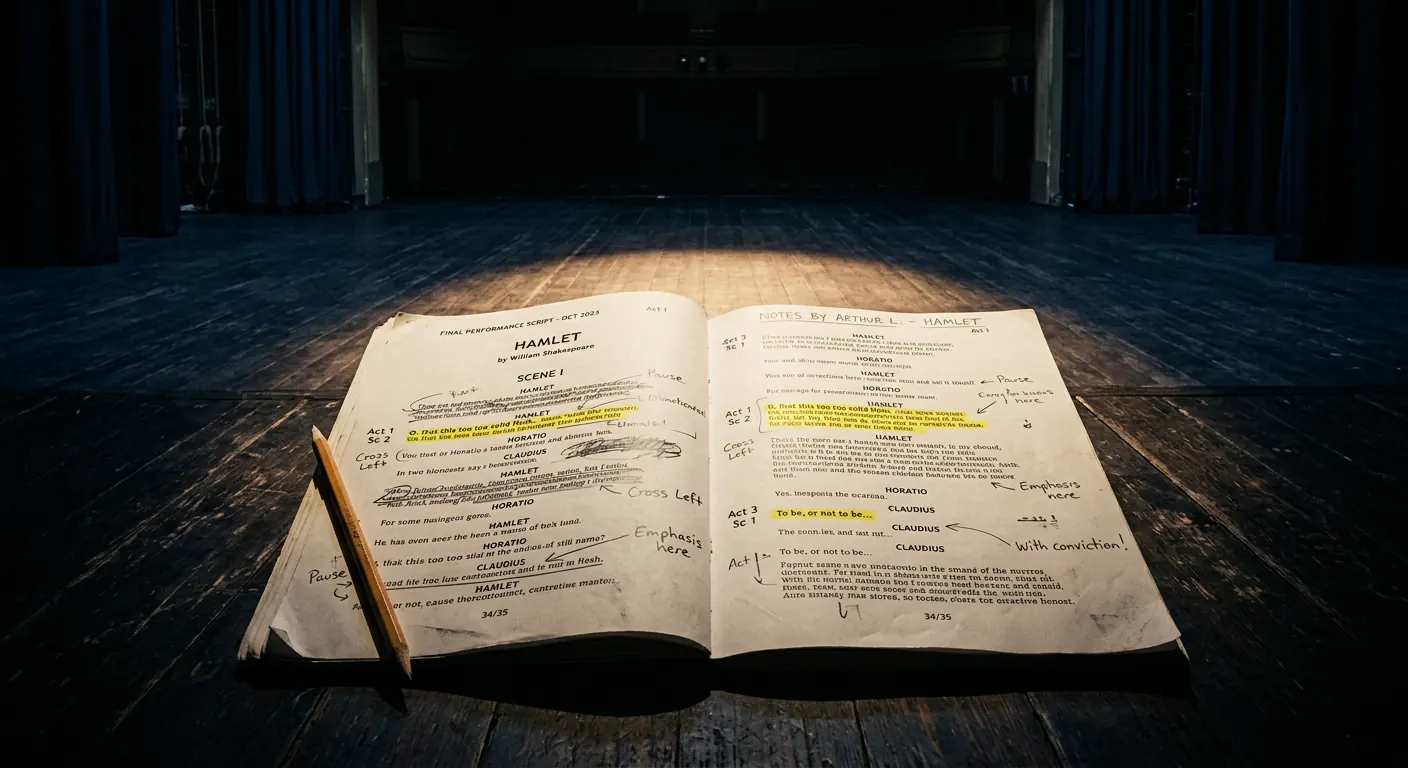
Make every character believable
Great acting is not about being dramatic — it is about being truthful. These tools help you build characters with real inner lives, from first read-through to final bow.
In every scene, your character wants something from someone. Write it down in one sentence: "I want my mom to see me as grown-up." Every line serves that want.
Memorize early using the peek-write method: cover the page, say the line, check, repeat. Once solid, practice with different emotions so you respond, not recite.
What your character does while listening matters as much as the lines you say. Practice scenes with the scripts closed, reacting in character to your partner.
After rehearsal, jot one thing your character did that surprised you and one question you still have. Over a show run, this journal becomes your character bible.
People rarely say exactly what they mean. If the line is "Fine, go," decide whether it means "Please stay." Let that hidden meaning shape your tone and face.
Move with confidence — even if you are new
You do not need years of studio training to look great on a school stage. What you need is focus, musicality, and the habit of marking choreography until it lives in your body.
Do not run the whole combo at once. Take eight counts, drill it slow, add speed, then connect to the next eight. Your body memorizes patterns, not sequences.
First pass: walk the moves while thinking the counts. Second pass: half energy. Third: full-out. Marking saves your body and actually makes you learn faster.
Listen to the song on repeat outside rehearsal. Know where every accent, pause, and build lands. Dancers who know the music look intentional even when they mess up.
Cold stretching does little; post-practice stretching while muscles are warm builds flexibility. Ten minutes after rehearsal beats nothing at all.
A turn with a story beats a perfect turn with a blank face. Decide what your character feels during each section and let your face carry it at full energy.
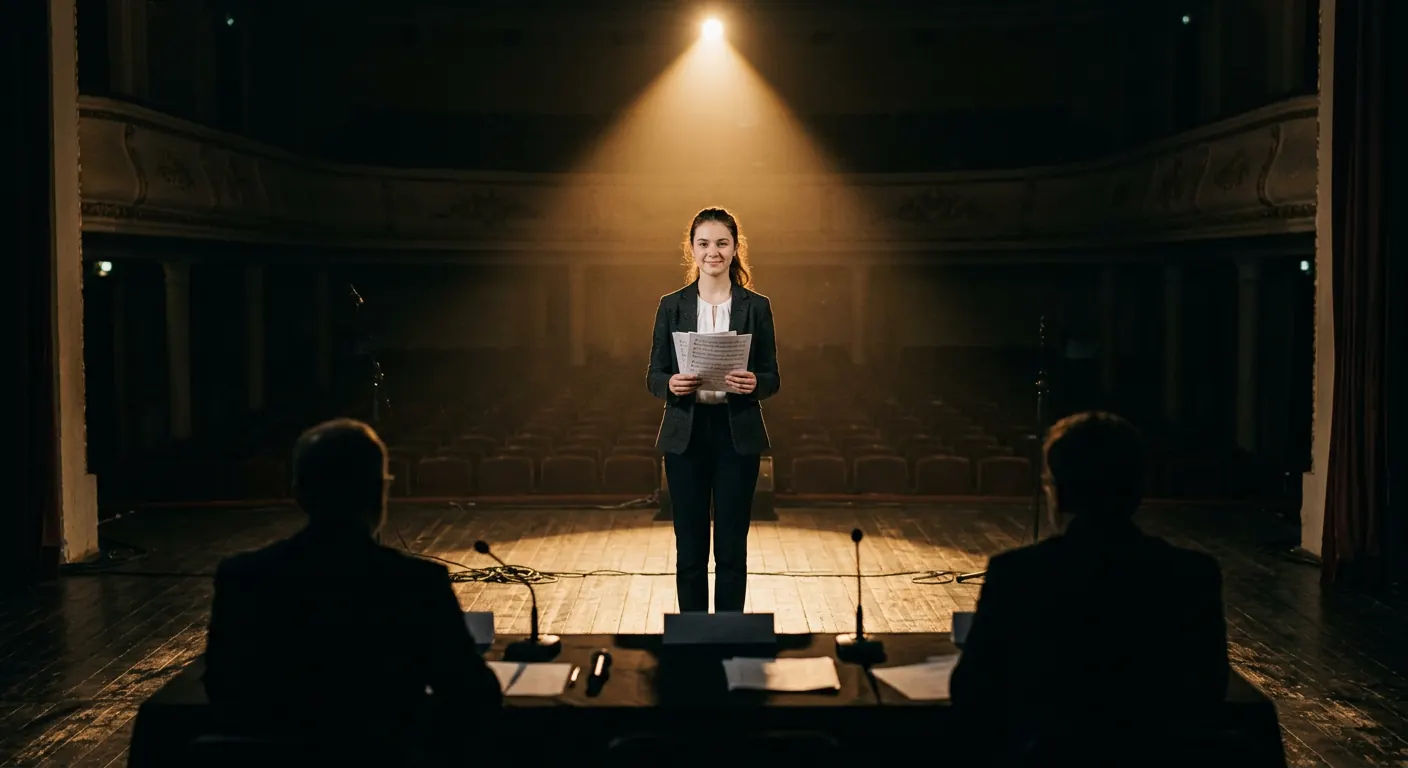
Walk in prepared, walk out proud
Auditions are a skill — and skills can be practiced. From the 16-bar cut to the final callback, here is exactly how to prepare so nerves never own the room.
Pick a cut in your comfortable range that starts strong — no long intros. Rehearse the entrance: music handoff, two-beat breath, first note confident. Practice it until it is automatic.
Walk in, smile, and say clearly: "Hi, I am Jordan Avery, and I will be singing Memories from Hi, Musical." That is it. Confident and short beats clever and long.
Sheet music in a binder marked for the pianist, water, comfortable clothes you can move in, and your audition form filled out completely. Nerves shrink your memory — lists cover for it.
Your pounding heart is your body getting ready to perform. Reframe it, take one slow breath before you enter, and put your focus on the story instead of the judges.
Did not get the part? Say thank you, ask your director what to improve for next time, and audition again. Casting depends on height, voice type, and school year — never just talent.
Know your instrument
Every voice has a home range. Here is a rough map — your school choir or voice teacher can confirm yours.
Highest — bright, clear top notes
You feel most comfortable when the melody sits high and sparkly.
Songs to try
Low for a female voice — warm and rich
You shine in the middle and lower part of your voice, with a soulful color.
Songs to try
High for a male voice — bright and ringing
You feel powerful on high sustained notes and romantic leads love you.
Songs to try
Middle for a male voice — warm and sturdy
You are comfortable in the sweet spot — strong low notes, easy middle, solid top.
Songs to try
The school season
The musicals most often produced by middle and high schools in the USA — with what makes each one special.
Turn-of-the-century New York
Large cast, flexible
Vocals
Dance
High-energy dancing and an ensemble that is on stage almost constantly. Great if your program is dance-heavy.
Standout roles
Jack Kelly · Katherine · Crutchie
Fairy-tale world
Medium, featured roles
Vocals
Dance
Sondheim made teen-accessible. Tough musically but gives singers serious growth — a badge of honor for any program.
Standout roles
The Baker · The Baker's Wife · The Witch
Modern day
Large, ensemble-driven
Vocals
Dance
Contemporary feel, funny roles for every type, and a college-look callback structure that teaches real audition etiquette.
Standout roles
Elle Woods · Emmett · Paulette
Modern day, slightly off-kilter
Large, kid + adult split
Vocals
Dance
A villain role with huge comic range and smart ensemble work. Revolting Children is a guaranteed show-stopper.
Standout roles
Matilda · Miss Honey · Miss Trunchbull
1912 Iowa
Very large, all ages
Vocals
Dance
Classic Americana. Big chorus numbers, barbershop harmonies, and a marching band finale every community loves.
Standout roles
Harold Hill · Marian · Winthrop
Whimsical modern
Flexible, great for small programs
Vocals
Dance
Perfect first musical: simple music, flexible casting, and scene work that teaches stage pictures to young actors.
Standout roles
Willy Wonka · Charlie · Veruca